
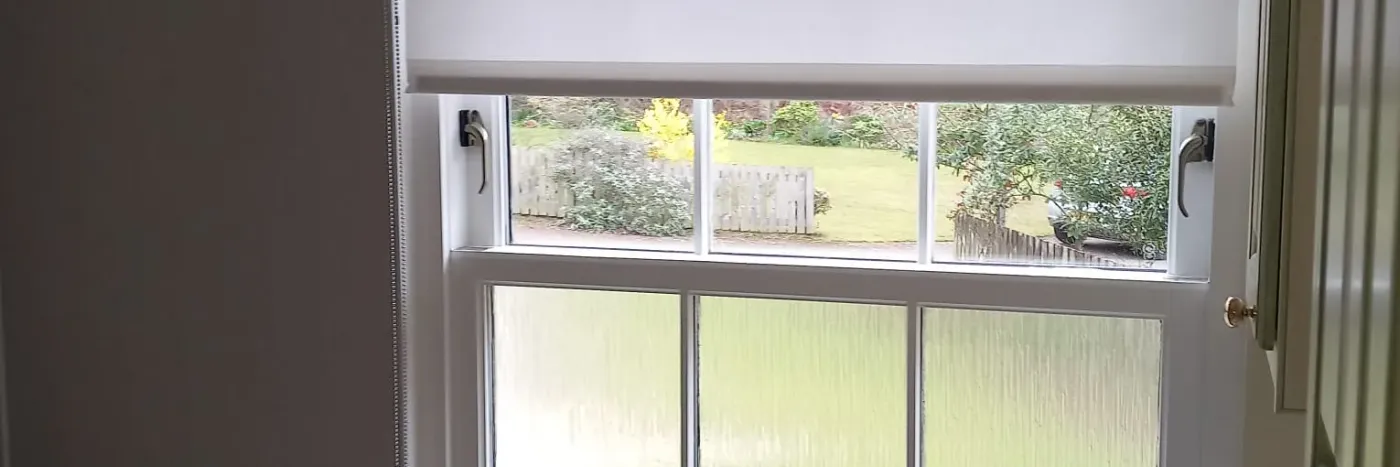
Bathrooms are the hardest room in the house to choose blinds for. Steam from showers, condensation on windows, water splashes near the bath, and high humidity throughout the day all create conditions that most blind fabrics and materials are not designed to handle. Choose the wrong blind and you will be dealing with mould, warping, or discolouration within months.
This guide covers which blind types work best in bathrooms, what materials to avoid, how to handle small or obscured bathroom windows, and what Edinburgh homeowners should know about condensation in older properties.
The Quick Answer: What Are the Best Blinds for Bathrooms?
Faux wood venetian blinds are the best all-round choice for most bathrooms. They look like real wood but are made from PVC or composite materials that will not warp, swell, or develop mould in humid conditions. Each slat tilts individually, giving you precise control over light and privacy. They wipe clean with a damp cloth.
If you want a simpler, more affordable option, roller blinds in moisture-resistant fabric are the next best choice. PVC-coated roller fabrics resist steam and condensation, sit close to the glass, and are easy to clean. They are the practical choice for smaller bathroom windows.
For uPVC bathroom windows, perfect fit blinds deserve a look. They clip into the window frame with no drilling, sit flush against the glass, and leave no gap for moisture to collect behind the blind.
Avoid real wood venetian blinds and fabric roman blinds in bathrooms. Real wood warps and cracks in humidity. Natural fabrics absorb moisture and develop mould over time, especially in bathrooms without mechanical ventilation.
Bathroom Blind Types Compared
Here is how each blind type performs in bathroom conditions:
| Blind Type | Moisture Resistance | Privacy | Light Control | Cleaning | Best For |
|---|---|---|---|---|---|
| Faux wood venetian | Excellent | Excellent (full tilt) | Excellent | Wipe each slat | Main bathrooms, en-suites |
| Roller (PVC-coated) | Very good | Good (full cover) | Good (up or down) | Wipe with damp cloth | Small windows, budget option |
| Perfect fit roller | Very good | Good | Good | Wipe with damp cloth | uPVC windows, rentals |
| Aluminium venetian | Excellent | Excellent (full tilt) | Excellent | Wipe each slat | Modern bathrooms |
| Real wood venetian | Poor (warps) | Excellent | Excellent | Dust only | Avoid in bathrooms |
| Fabric roman | Poor (absorbs moisture) | Good | Good | Professional clean | Avoid in bathrooms |
Faux Wood Venetian Blinds: The Top Choice
Faux wood venetian blinds are the strongest bathroom option for several reasons:
- Completely waterproof. PVC and composite slats will not warp, crack, or swell no matter how much steam they are exposed to
- Adjustable light control. Tilt the slats to any angle to let in natural light while maintaining privacy from neighbours
- Easy to clean. Wipe each slat with a damp cloth. No special cleaning products needed
- Look like real wood. Modern faux wood finishes are difficult to tell apart from real timber, giving you the premium look without the moisture risk
- Durable. A good-quality faux wood venetian will last 10 years or more in bathroom conditions
Faux wood venetian blinds are priced by the number of slats and the width of the window. We provide free, no-obligation quotes after measuring your bathroom windows on site.
Roller Blinds: The Practical Alternative
Roller blinds in moisture-resistant fabric are the most popular bathroom blind we fit across Edinburgh. They are affordable, straightforward, and work well in the smaller bathroom windows common in tenement flats and older properties.
What to look for in a bathroom roller blind:
- PVC-coated or polyester fabric. These resist moisture absorption and wipe clean
- Blackout or dimout lining. Useful for privacy, especially in ground-floor or street-facing bathrooms
- Metal or plastic components. Avoid wood or untreated metal brackets that can corrode in humid environments
- A cassette headrail. This encloses the rolled-up blind and protects the fabric from dust and moisture when the blind is open
Roller blinds are priced by width and drop. We quote after measuring, with no obligation and no call-out fee.
Perfect Fit Blinds: No Drilling, No Gaps
Perfect fit blinds are a strong choice for bathrooms with uPVC windows. The blind clips directly into the glazing bead, sitting flush against the glass with no gap at any edge. This has two benefits in bathrooms:
- No condensation trap. Because the blind sits against the glass rather than in front of it, there is no pocket of still air between the blind and the window where moisture can collect and cause mould
- No drilling. The frame is not damaged, which matters in rented properties and newer homes where you do not want to mark the windows
Perfect fit blinds come in roller and pleated styles with moisture-resistant fabric options. They are slightly more expensive than standard roller blinds but the clean finish and no-drill installation make them popular in modern bathrooms.
Materials to Avoid in Bathrooms
Some blind materials are not suitable for bathroom use. Fitting the wrong material leads to damage within months:
- Real wood. Timber slats absorb moisture from steam and condensation. Over time, the wood swells, warps, and can crack. Even treated wood is not reliably waterproof in a bathroom that gets daily use
- Natural fabric (cotton, linen, silk). These absorb moisture and provide a surface for mould to grow. A fabric roman blind in a steamy bathroom can develop mould spots within months
- Untreated metal. Cheap aluminium or steel brackets and chains can corrode in humid environments. Look for blinds with coated or stainless steel components
Edinburgh Bathrooms: What to Know
Edinburgh properties have specific challenges that affect bathroom blind choices:
Tenement bathrooms in areas like Morningside, Bruntsfield, Marchmont, Stockbridge, and Corstorphine are often small rooms with a single window. Many face internal courtyards or close-spaced neighbours, making privacy a priority. A faux wood venetian or blackout roller blind gives full privacy without blocking all natural light.
Condensation in older properties is more common in Edinburgh’s stone-built tenements and pre-war houses, where single-glazed or original sash windows create cold surfaces that attract moisture. If your bathroom window regularly runs with condensation, avoid any fabric-based blind and choose faux wood or PVC roller instead. Good ventilation (an extractor fan or open window after bathing) matters as much as the blind material.
Small windows are common in Edinburgh bathrooms, particularly in tenement flats where the bathroom was often converted from a former cupboard or hallway. For windows under 40cm wide, a compact roller blind or a perfect fit blind gives a clean look without overwhelming the small space.
Ground-floor and basement bathrooms in Edinburgh’s tenement and colony properties are often at street level or below, making privacy essential. A bottom-up roller blind or a venetian blind with the slats angled upward lets light in from above while blocking the view from the street.
How to Choose the Right Bathroom Blind
Follow these steps to pick the right blind for your bathroom:
- Check your window frame material. uPVC windows suit perfect fit blinds. Timber or stone surrounds suit recess-fitted roller or venetian blinds
- Assess your ventilation. If you have no extractor fan and the window is your main ventilation, choose a blind that is easy to open fully (roller or venetian)
- Consider your privacy needs. Street-facing or neighbour-facing windows need a blind that can close fully. Venetian blinds offer the most flexibility
- Measure the recess depth. Shallow recesses (under 5cm) may not fit a venetian blind inside the recess. A roller blind or face-fixed venetian may be needed
- Think about cleaning. If you are unlikely to clean the blind regularly, PVC roller is the lowest-maintenance option
Frequently Asked Questions
Can you put roman blinds in a bathroom?
We do not recommend fabric roman blinds for bathrooms with showers or baths. The fabric absorbs moisture and develops mould over time, even with regular cleaning. If you strongly prefer the roman blind look, choose a synthetic fabric with a moisture-resistant coating and ensure your bathroom has good mechanical ventilation to reduce humidity.
Are roller blinds OK for bathrooms?
Yes, provided you choose a moisture-resistant fabric. PVC-coated polyester is the standard bathroom choice and handles steam and condensation well. Avoid plain cotton or linen roller fabrics in bathrooms, as these absorb moisture and are difficult to keep clean in humid conditions.
Do perfect fit blinds work in bathrooms?
Yes, and they are a particularly good choice for bathrooms with uPVC or aluminium window frames. They sit flush against the glass with no gap at any edge, which reduces condensation build-up behind the blind. The no-drill fitting also means you do not need to mark or damage the window frame.
How do you stop mould on bathroom blinds?
Choose a non-absorbent material such as faux wood, PVC, or aluminium. Ventilate your bathroom after bathing by opening a window or running an extractor fan for at least 15 minutes. Wipe the blind and window frame dry if condensation builds up. Avoid fabric blinds in bathrooms without mechanical ventilation.
What is the most affordable bathroom blind option?
A moisture-resistant roller blind is the most affordable bathroom option. Pricing depends on the window width, drop measurement, fabric choice, and whether you choose a standard bracket or a cassette headrail. We provide free, no-obligation quotes after measuring your windows on site.
If you are also choosing blinds for bedrooms, read our companion guide: best blinds for bedrooms.
Ready to Choose Bathroom Blinds?
If you are replacing bathroom blinds or fitting out a new bathroom, we can help you choose the right material and style for your window. We bring fabric and material samples to your home, measure your bathroom windows precisely, and fit everything with a 3-year guarantee.
Get a free quote or call us on 0131 553 1073 to arrange a free home visit anywhere in Edinburgh. We are a local family business based in our Edinburgh blinds and curtains workshop, and every product is made by hand in Leith.