
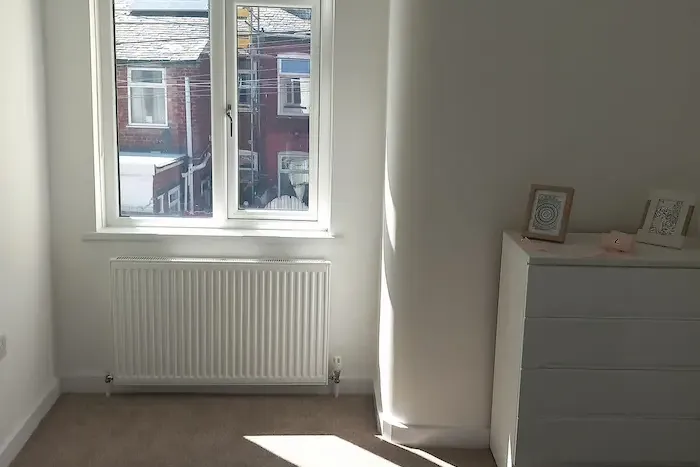
If you struggle to sleep during Edinburgh’s long summer evenings, when daylight lingers past 10pm and returns before 5am, you are not alone. Light is one of the biggest disruptors of sleep quality, and standard blinds and thin curtains do very little to stop it.
Blackout blinds block external light almost completely. They create genuine darkness in your bedroom regardless of what is happening outside, whether that is midsummer daylight, streetlights, or headlights from passing traffic. For anyone who needs proper darkness to sleep well, they are one of the most effective changes you can make to your home.
This guide covers how blackout blinds work, which types are available, what to consider for different rooms, and how to get the best results from your installation.
How Blackout Blinds Work
Blackout blinds use a specially coated or layered fabric that blocks light from passing through the material. The coating is usually applied to the reverse side of the fabric, so the front face looks and feels like a normal blind while the back does the work.
There are two main approaches to achieving blackout:
-
Coated fabrics: A layer of acrylic or rubber-like coating is bonded directly to the back of the fabric. This is the most common method and is used on roller blinds. The coating blocks 99% or more of visible light through the fabric itself.
-
Lined fabrics: A separate blackout lining is stitched behind the face fabric during manufacturing. This is the method used for roman blinds and curtains. It allows you to choose any decorative fabric on the front while the lining handles the light blocking.
It is worth understanding that even a true blackout fabric will not create a completely sealed dark room on its own. Light can still leak around the edges of the blind where it meets the window frame. The amount of edge leakage depends on the blind type, the fitting method, and the window itself. We will cover how to minimise this below.
Which Type of Blackout Blind Is Best?
Blackout Roller Blinds
The most popular and affordable option. A roller blind with blackout fabric rolls neatly into a cassette at the top of the window when raised. When lowered, it sits flat against the glass.
Pros: Affordable, slim profile, wide fabric range, easy to operate, works in any room including kitchens and bathrooms (with moisture-resistant blackout fabric).
Cons: Some light leakage around the edges unless fitted with side channels or a cassette system. Standard roller blinds sit slightly away from the glass, creating a small gap.
Best for: Bedrooms, nurseries, media rooms, and any room where you want effective blackout at a reasonable price.
Tip: Ask about cassette-mounted roller blinds. The cassette housing covers the rolled fabric at the top and optional side channels guide the fabric edges, significantly reducing light leakage compared to a standard open roller.
Blackout Roman Blinds
A roman blind with blackout lining stitched in during manufacturing. The face fabric folds into soft horizontal pleats when raised, giving a warmer, more decorative look than a roller blind.
Pros: Beautiful layered appearance, excellent insulation (the lining adds a thermal barrier), works well in living rooms and bedrooms where aesthetics matter as much as function.
Cons: More expensive than roller blinds due to extra fabric and construction. Not suitable for moisture-heavy rooms like bathrooms. Slightly more light leakage than a well-fitted roller because the fabric does not sit as close to the glass.
Best for: Master bedrooms, guest rooms, and living rooms where you want blackout capability without sacrificing the soft, layered look of a roman blind.
Blackout Curtains
Made-to-measure curtains with blackout lining offer the most complete light blocking of any window treatment. When properly fitted, floor-length curtains cover the entire window and overlap the wall on both sides, leaving very few gaps for light to enter.
Pros: The most effective blackout solution overall. Excellent insulation. Can be paired with a blind behind for layered light control. Wide range of fabrics and heading styles.
Cons: The most expensive option. Requires curtain poles or tracks. Takes up more visual space in the room. Not practical for small windows or rooms where space is tight.
Best for: Bedrooms where maximum darkness is the priority and you have the space and budget for full-length curtains.
Perfect Fit Blackout Blinds
Perfect fit blinds clip directly into uPVC window frames with no drilling. Available as roller or pleated blinds with blackout fabric. Because the blind sits within the glass unit rather than over the frame, it minimises edge light leakage better than any other blind type.
Pros: Minimal light leakage due to close fit against the glass. No drilling required. Moves with the window if you tilt or open it. Easy to remove without damage.
Best for: uPVC windows in bedrooms, nurseries, and rental properties where you cannot drill into the frame.
Blackout Blinds Room by Room
Bedrooms
This is where blackout blinds make the biggest difference. Edinburgh’s latitude means summer nights barely get dark. A bedroom without blackout blinds will be noticeably lighter from late April through August, and that ambient light suppresses melatonin production and disrupts sleep cycles.
For bedrooms, we recommend either a blackout roller blind with a cassette system for the cleanest look, or blackout curtains for maximum darkness and insulation. Many of our Edinburgh customers choose both: a blackout roller blind for the practical light blocking, with decorative curtains in front for warmth and style.
Nurseries and Children’s Rooms
Blackout blinds are essential for nap times and early bedtimes. Young children are particularly sensitive to ambient light, and getting a toddler to sleep at 7pm while the sun is still up is a real challenge without proper blackout.
We recommend blackout roller blinds with cordless or motorised operation for child safety. All our blinds meet current UK child safety standards, with no exposed cords or chains that could pose a risk.
Living Rooms and Media Rooms
Full blackout is not always the goal in a living room. Often you want to reduce glare on a TV screen in the afternoon without making the room completely dark. For this, a blackout roller blind gives you the option of full darkness when you want it and full light when you raise it.
For dedicated media rooms or home cinemas, blackout roller blinds with side channels and a cassette system deliver near-total darkness comparable to commercial cinema screens.
Kitchens and Bathrooms
Standard blackout fabrics are not suitable for high-moisture rooms. However, moisture-resistant blackout roller blinds are available specifically for kitchens and bathrooms. These use a PVC-coated blackout fabric that resists condensation and wipes clean. They block light just as effectively as standard blackout fabric while handling the humidity.
How to Minimise Light Leakage
The fabric itself blocks 99% or more of light, but edges are where leakage happens. Here is how to reduce it:
-
Choose a cassette system: The cassette housing covers the top of the blind where the fabric rolls, eliminating the gap that standard open rollers leave. This single change makes the biggest difference.
-
Add side channels: Aluminium or plastic guides that run down each side of the blind, keeping the fabric edge flush against the window. Combined with a cassette, this creates a near-sealed system.
-
Fit inside the recess: A blind fitted inside the window recess (rather than on the wall above it) sits closer to the glass and has less room for light to leak around the edges.
-
Consider perfect fit: For uPVC windows, perfect fit blinds clip into the glass bead and sit right against the glass, minimising edge gaps without any additional hardware.
-
Layer with curtains: Even a basic blackout blind with some edge leakage becomes highly effective when combined with curtains that overlap the wall. The curtains catch any light that gets past the blind edges.
What to Expect When You Order
When you get in touch about blackout blinds, here is how the process works:
-
Free home visit: We come to your home with fabric samples, including blackout options in all blind types. You can see and feel the fabrics in your own rooms and light conditions.
-
Measuring: We measure your windows precisely, noting the recess depth, frame type, and any obstructions. This determines whether an inside or outside recess fit will give you the best blackout performance.
-
Manufacturing: Every blind is made in our Leith workshop. Typical turnaround is 1 to 2 weeks for roller blinds, 2 to 3 weeks for roman blinds and curtains.
-
Fitting: We install everything in a single visit. We test the blackout performance, adjust if needed, and make sure you are happy with the result.
Every product comes with a 3-year guarantee. If anything is not right, we come back and fix it.
Why Blackout Blinds Matter for Sleep in Edinburgh
Edinburgh sits at 55.9 degrees north. In midsummer, the sun sets after 10pm and rises before 5am, with twilight lingering in between. That is fewer than 5 hours of true darkness. For anyone who needs to sleep during those hours, or who has children with early bedtimes, standard window coverings simply do not cut it.
Blackout blinds are not a luxury in Edinburgh. For many people, they are a necessity. The investment pays for itself in better sleep, which affects everything from energy levels to mood to productivity.
For more on choosing bedroom blinds beyond blackout, read our guide to the best blinds for bedrooms.
If you are not sleeping well and your bedroom gets any light at night, blackout blinds should be the first thing you try. See our blackout blinds range for the options and how we fit them, then get in touch for a free consultation, or call us on 0131 553 1073. We will help you choose the right blackout solution for your windows and budget. Every blind we sell is made at Edinburgh’s blinds workshop in Leith and comes with a 3-year guarantee.